


You might be asking yourself, Yosemite? Really? For fall color? Yes, New England has entire tourism campaigns built around leaf peeping, but once autumn reaches Yosemite Valley, the landscape changes completely. Black oaks turn shades of gold, amber, and deep orange. Cottonwoods become brilliantly yellow. Dogwoods introduce touches of reds and pinks. Bigleaf maples illuminate the riverbanks beneath Yosemite’s granite walls, with leaves literally bigger than your face.
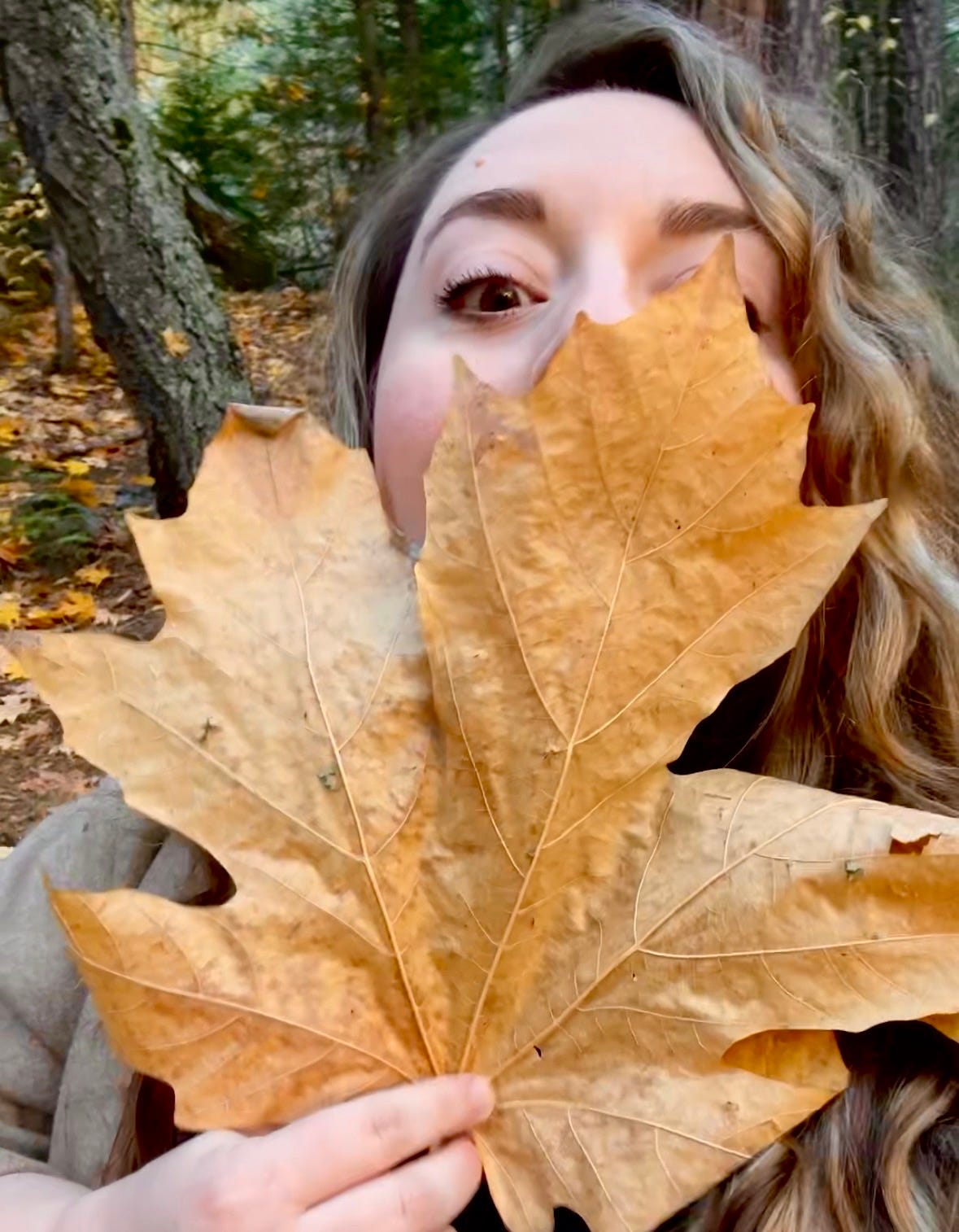
I visited over Halloween weekend in 2025 and spent a half day photographing different locations around the valley floor. I went a couple weeks before peak, and personally, that is exactly when I prefer to experience fall foliage. I would rather arrive a bit prior to peak, instead of risking stick season if high winds or a storm decide to strip everything bare. This guide includes every location I photographed, additional classic Yosemite photography spots worth scouting, and the practical information you will need to organize a fall foliage weekend of your own.
When does fall color peak in Yosemite?
The Yosemite fall color season will begin at higher elevations in late September and continue into early November, but elevation matters enormously. Higher-elevation aspens are always going to turn first. The oaks, dogwoods, maples and cottonwoods on the floor of Yosemite Valley tend to follow later, commonly becoming most colorful from the middle of October into early November.
There is no guaranteed peak weekend, anywhere. Full stop.
Temperature, drought, early snow, wind and individual tree species all affect timing. Even within Yosemite Valley, one grove may be glowing while another remains mostly green. Some dogwoods can continue changing into November, while other trees may already be dropping their leaves.
For a fall foliage trip to the valley floor, I would begin watching conditions around the third week of October and consider traveling anytime from approximately mid-October through the first half of November.
My personal sweet spot would be the final weekend of October or the first weekend of November, understanding that every year will be different.
What kind of fall color will you see?
Yosemite does not become one uninterrupted sea of red and orange. Its autumn color appears in layers and pockets.
On the valley floor, expect:
California black oak: yellow, gold, dark orange and brown
Bigleaf maple: bright yellow, especially along wetter areas
Black cottonwood: brilliant yellow
Pacific dogwood: yellow, pink, red and occasionally purplish tones
Willows and smaller shrubs: scattered yellow, orange and red
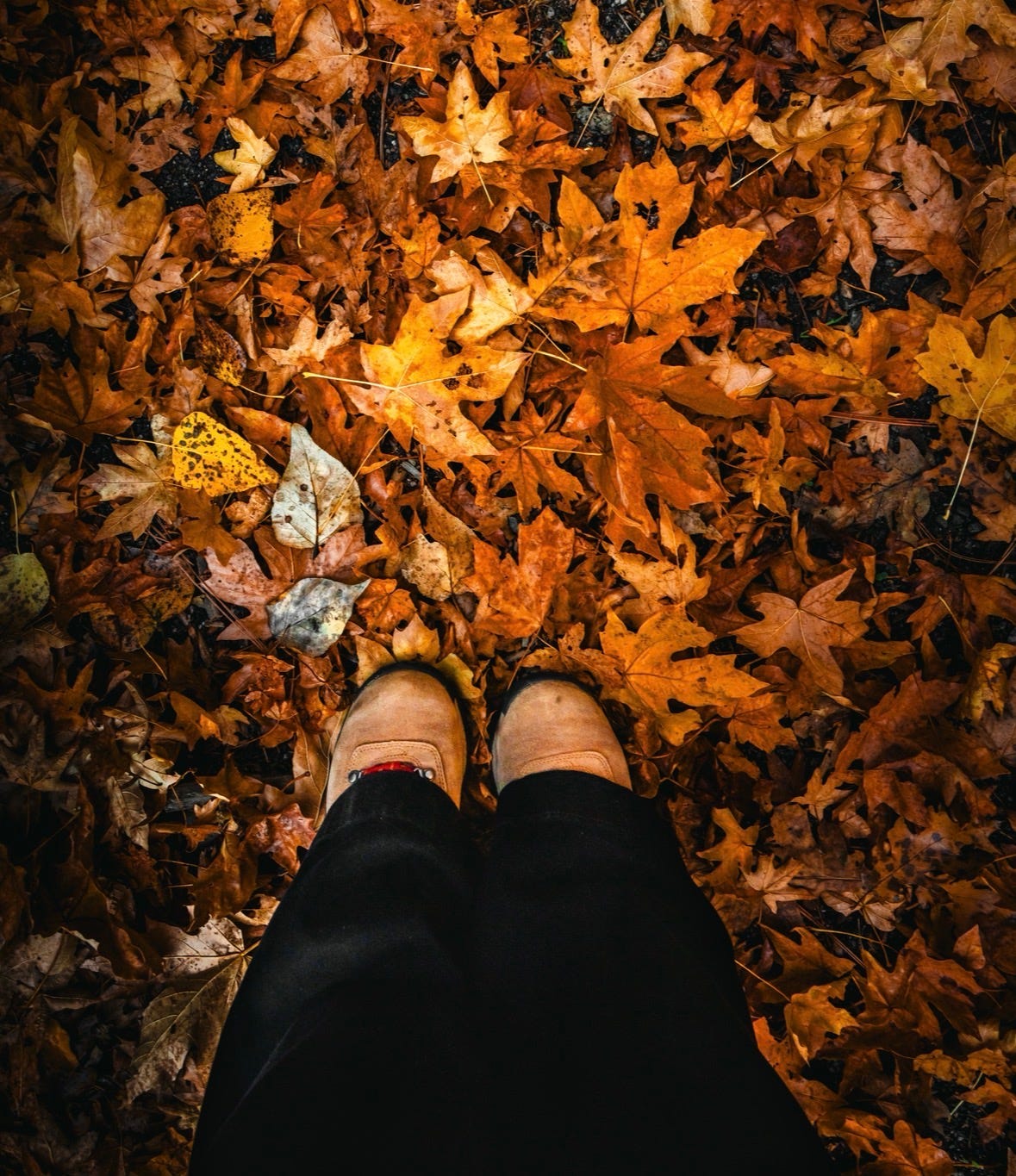
The dark conifers and pale granite cliffs provide contrast around those deciduous trees, which is why even an isolated patch of color can become a strong composition.
The best places to photograph fall color in Yosemite Valley
1. Yosemite Valley Chapel
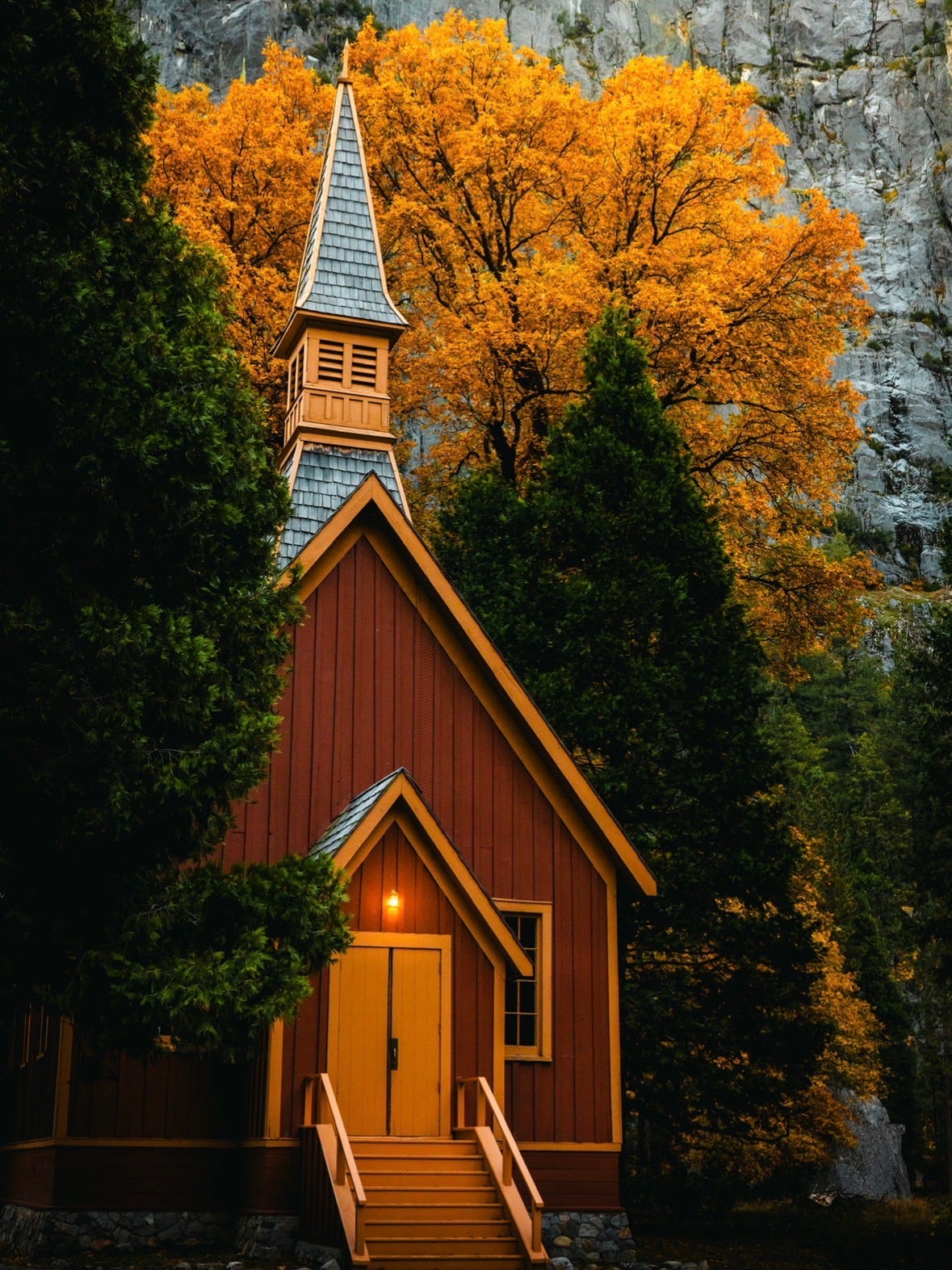
The Yosemite Valley Chapel may be my favorite place to begin a fall photography morning.
The small red chapel already looks as though it belongs in a horror movie. When the trees behind it turn gold, those colors mirror and amplify the warm tones in the building.
I photographed the chapel shortly after sunrise. The sun had not yet reached the building and the light over the entrance was still glowing. That combination created a beautifully moody scene: the chapel remained in cool shadow while the yellow foliage behind it provided almost all the warmth in the frame.
Best time to photograph it
Arrive around sunrise or shortly afterward.
Photographing before direct sunlight reaches the chapel can help preserve the atmosphere and prevent the building from becoming overly bright against a darker background. Early morning may also give you a better chance of photographing the front without visitors walking in and out of the frame.
Later light could work beautifully too, but the look will be less subdued and more traditionally bright.
Where to park
There is a small parking lot at the chapel itself, but I chose to leave my vehicle at the nearby Sentinel bridge parking area for more rounded access to a variety of shooting locations. It also reduced the risk of driving by a location and having to make another lengthy circuit through Yosemite Valley’s one-way road system.
The chapel, Sentinel Meadow and the surrounding area are recognized Yosemite viewpoints and are easily connected on foot.
Photography ideas
Try more than the obvious centered composition.
Photograph:
The chapel directly from the front
A compressed vertical image emphasizing the steeple and foliage
Wider frames that include the surrounding granite
Details of the illuminated doorway
The building framed by nearby evergreens
The chapel from across the meadow
A longer focal length can help bring the golden tree and granite wall visually closer to the chapel.
2. Superintendent’s Bridge

Superintendent’s Bridge sits opposite the historic Yosemite Valley Chapel and provides access to walk across the Merced River. The bridge includes steps, something worth noting for anyone planning around mobility limitations.
I snapped this shot from roughly the middle of the bridge, aiming north-northeast towards the shoreline. The river was calm enough to hold a beautiful reflection of the autumn trees.
Best conditions
This location depends less on dramatic sky and more on the surface of the river.
Go early, when:
Wind is minimal
The water is calmer
The trees may still be softly lit
Fewer people are crossing the bridge
Even a mild breeze can disrupt a clean reflection, so photograph the scene as soon as you see the water settle.
Photography tip
Do not automatically center the horizon.
Try giving more space to the reflection than the trees themselves, especially when the water is smooth. The darker reflection can create a more abstract and atmospheric image than a conventional landscape composition.
Also photograph in both directions. River reflections, background cliffs and available light can differ dramatically depending on which side of the bridge you face.
3. Pohono Bridge
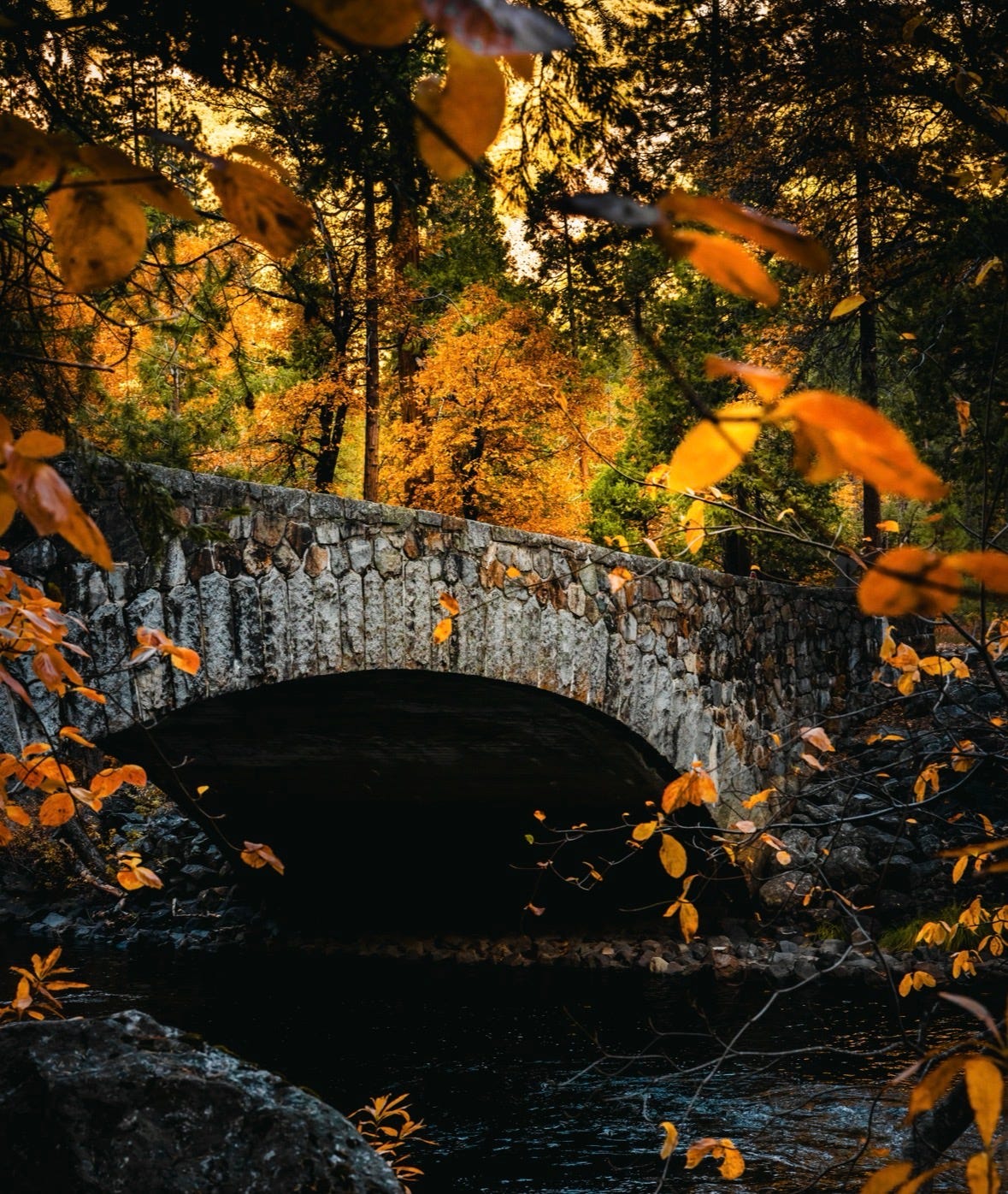
Pohono Bridge is one of Yosemite’s most atmospheric stone bridges, particularly when photographed through autumn foliage.
After driving across the bridge, look for the obvious roadside areas where vehicles can pull off. From there, access the Valley Loop Trail and walk down toward the riverbank.
I photographed from the east side of the bridge, facing roughly north-northwest toward the arch.
Golden leaves surrounded the bridge and created a natural frame. The dark opening beneath the stone arch provided contrast, while leaves in the immediate foreground gave the image depth.
Best time to photograph it
I photographed here in the morning, after the earliest sunrise locations.
Morning light filtering through the forest can illuminate individual leaves without evenly lighting the entire scene. That unevenness works well here because the bridge feels more mysterious when portions remain in shadow.
Overcast weather could be equally effective by reducing harsh highlights on the stone.
Composition advice
Look for foreground foliage rather than standing in the first obvious open space.
Branches close to the lens can:
Frame the bridge
Hide distracting empty areas
Add layers to the image
Make the viewer feel as though they discovered the bridge through the forest
A polarizing filter may help control glare on wet leaves or the surface of the river, although rotating it too strongly can remove reflections you actually want to preserve.
The western portion of the Valley Loop Trail passes through quieter areas beside the Merced River and provides views of El Capitan, Cathedral Rocks, Bridalveil Fall and other major landmarks.
4. The Southside Drive “fall tunnel”

One of my favorite photographs I have ever taken came from an otherwise unmarked portion of Southside Drive.
Approximate coordinates:
37.7205773, -119.6367520
At this location, the road curves through tall trees surrounded by intense gold and orange foliage. The asphalt acts as a leading line, pulling the viewer directly through the illuminated forest.
This is not an official scenic viewpoint. It is simply one of those places where slowing down and paying attention pays off.
Access
There are pullouts along Southside Drive, but only use places where your vehicle can be parked completely and legally outside the travel lane.
Another option is to walk this portion of the Valley Loop Trail. For a period, the trail runs close to the road, allowing you to explore different angles without repeatedly moving your vehicle.
Best time to photograph it
I photographed this scene in the morning when portions of the foliage were receiving light while the surrounding trees remained dark.
That contrast made the golden section appear illuminated from within.
Completely flat midday light may make the scene feel less dimensional. Aim for early morning, later afternoon or a day with intermittent cloud cover.
Important safety note
Be alert for quiet vehicles, bicycles and drivers who may be looking at scenery rather than expecting a photographer near the road.
5. Swinging Bridge

Swinging Bridge is one of the easiest places to combine fall foliage, the Merced River and classic Yosemite scenery.
Despite the name, the current bridge does not swing. The surrounding picnic area offers access to both sides of the river and views toward Yosemite Falls.
In autumn, explore beyond the first view from the bridge itself.
Look for:
Reflections in slow-moving water
Golden trees along the riverbank
Fallen leaves gathering against rocks
Yosemite Falls framed by autumn branches
Wider views from the picnic area
Intimate photographs of leaves floating in the river
Best light
Sunrise can produce calm water and fewer people. Later morning though is ideal as it may provide stronger illumination on the foliage and meadow.
If Yosemite Falls is low or dry (a common conundrum in autumn) build your composition around the trees, river and granite rather than depending on the waterfall as the dominant subject. Fall generally brings lower water levels, although Bridalveil Fall continues flowing year-round.
6. Yosemite Valley View
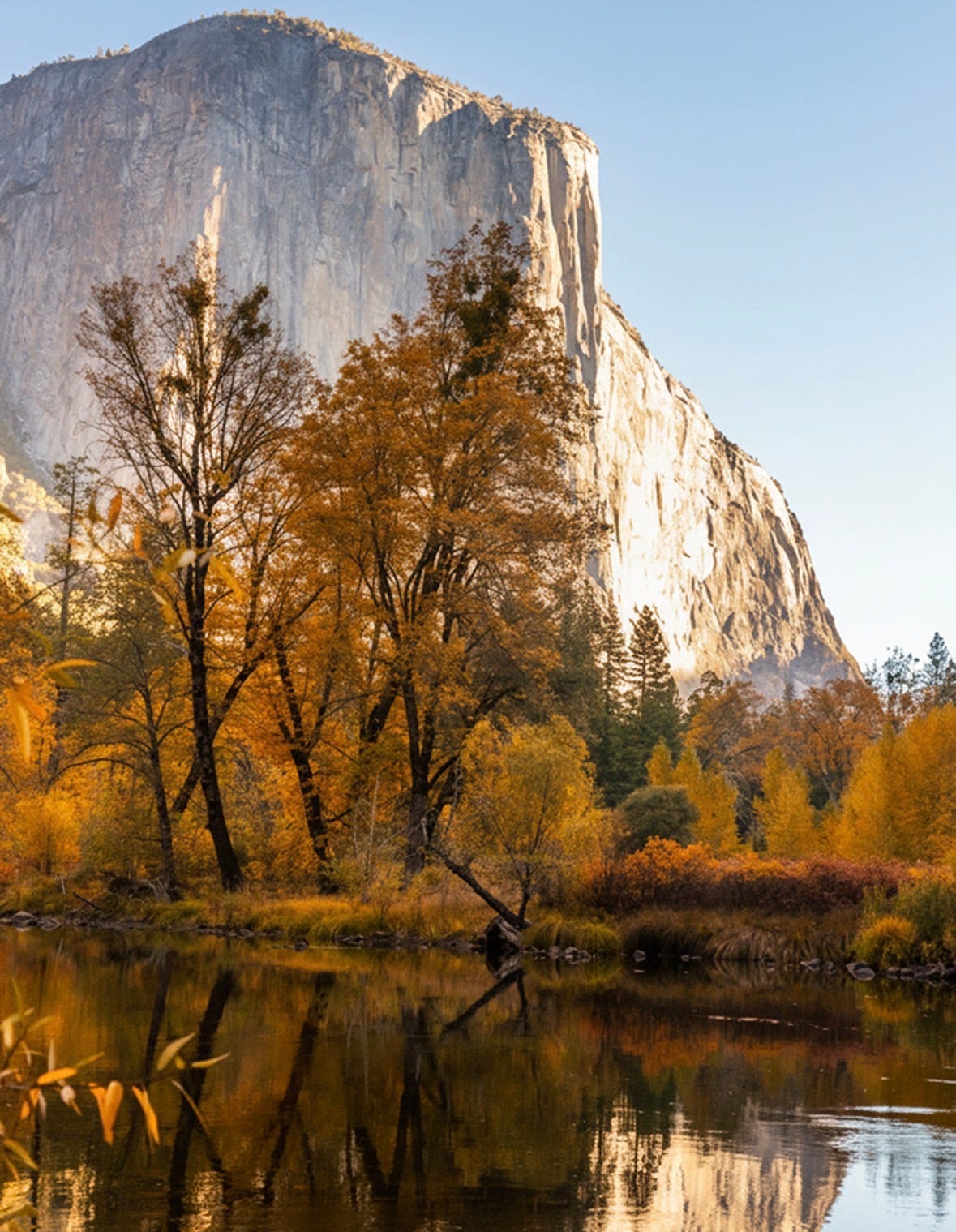
Valley View is one of Yosemite’s classic roadside compositions, with the Merced River in the foreground, El Capitan rising on the left and Cathedral Rocks on the right. It is located on Northside Drive as you are traveling out of the valley, shortly before Pohono Bridge and the junctions leading toward the park exits. Autumn trees along the river can introduce color into an otherwise granite-heavy panorama.
The challenge with Valley View
I found this location more difficult to photograph early in the morning (depicted above). Before the light reaches the entire valley floor, the scene can contain an extreme range between blindingly bright granite, shaded trees and dark water. Unless fog or unusually dramatic conditions are present, the image may feel visually unbalanced. I would return several hours after sunrise, when sunlight begins reaching more of the riverbank and valley floor, OR save this spot for sunset.
Composition ideas
The classic wide-angle photograph is only one option.
Try:
A long exposure that softens the Merced River
A vertical frame featuring reflected trees
A telephoto composition isolating El Capitan and one golden tree
Leaves or rocks as a foreground element
A panoramic crop emphasizing the valley walls
A lower camera position near the river
The parking area is not huge, so arrive with patience and avoid blocking spaces after finishing your photograph.
7. Northside Drive pullouts
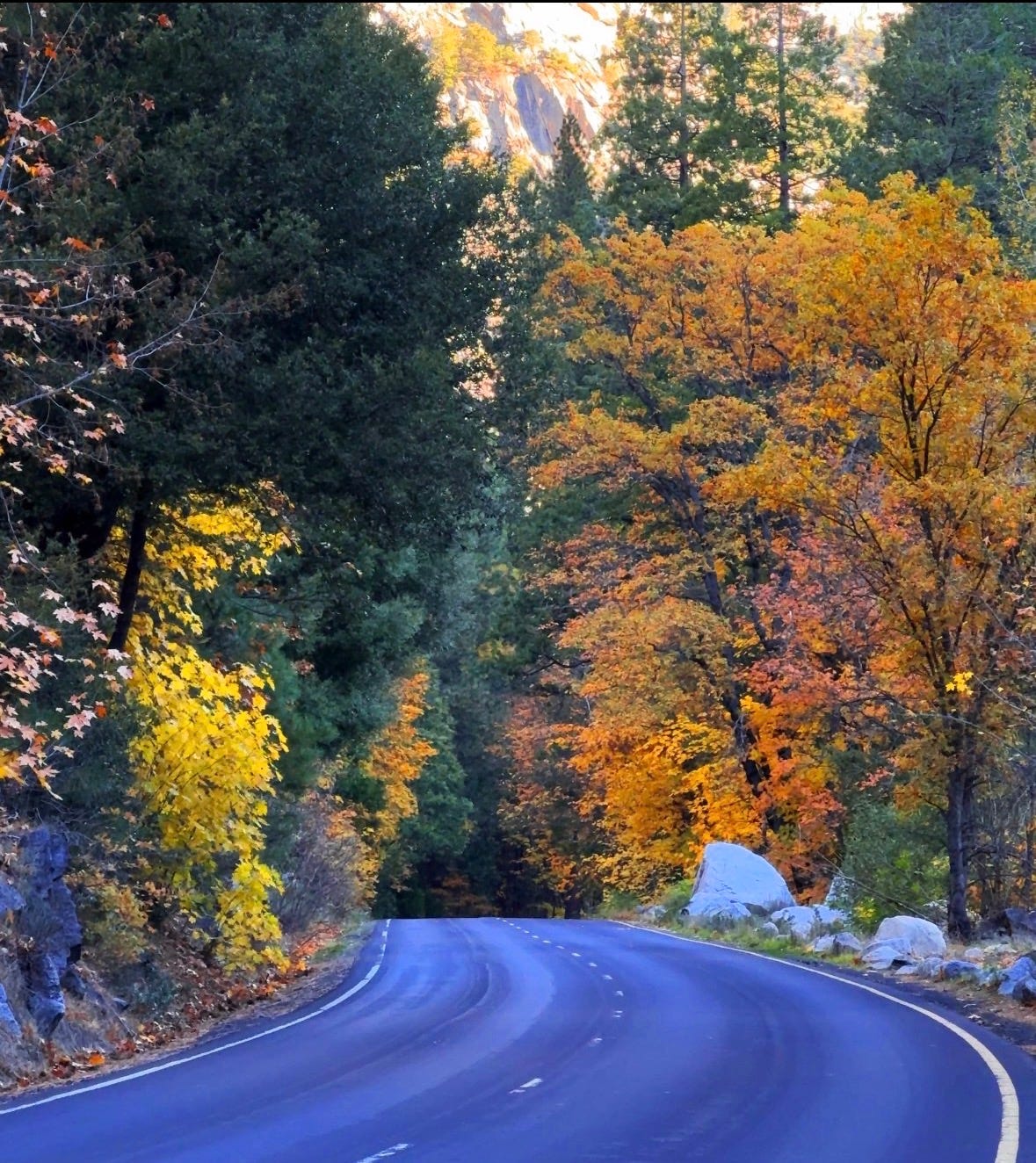
Some of Yosemite’s best autumn photographs may come from places without official names.
Northside Drive contains a variety of pullouts with views toward:
El Capitan
The Three Brothers
Yosemite Falls
The Merced River
Forested sections of the valley floor
Individual oak and cottonwood groves
Because Northside Drive generally carries traffic out of the valley, treat every promising pullout as though it may be your only easy opportunity to stop. Passing one can mean completing a significant portion of the one-way loop before returning.
The safest strategy is to keep a list of promising locations, but remain flexible enough to stop when light and foliage align.
8. Sentinel Bridge and Sentinel Meadow
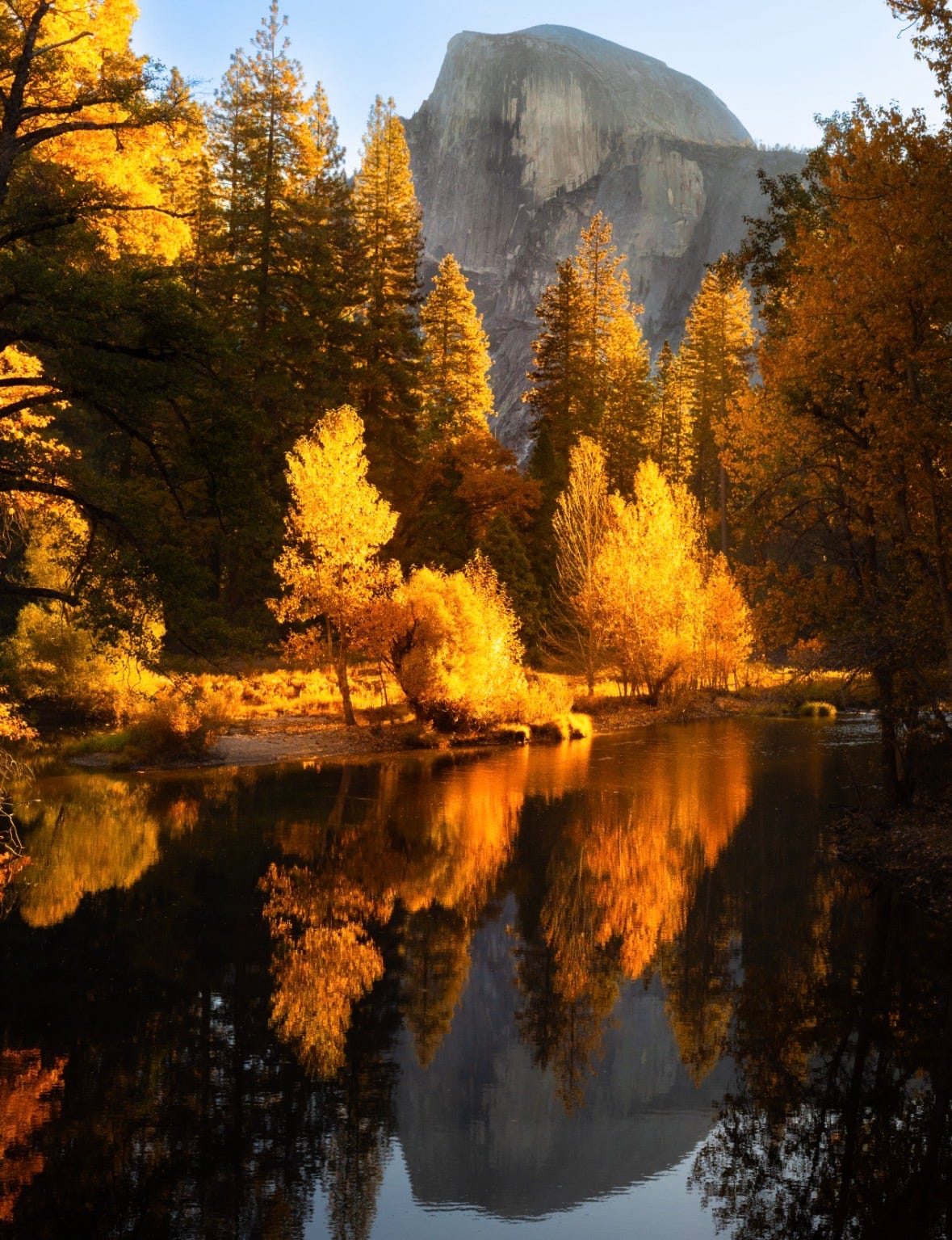
Sentinel Bridge is one of the most famous Yosemite photography locations because of its view of Half Dome above the Merced River. Under calm conditions, Half Dome can appear reflected in the water.
Fall color may not dominate the entire scene, but golden trees and grasses can warm the foreground.
Best time
Sentinel Bridge is traditionally associated with evening light on Half Dome, but autumn photography does not need to follow the classic formula.
Scout it at:
Sunrise for calm water and cool tones
Morning for reflected trees
Late afternoon for warmer granite
Blue hour for a quieter, more subdued image
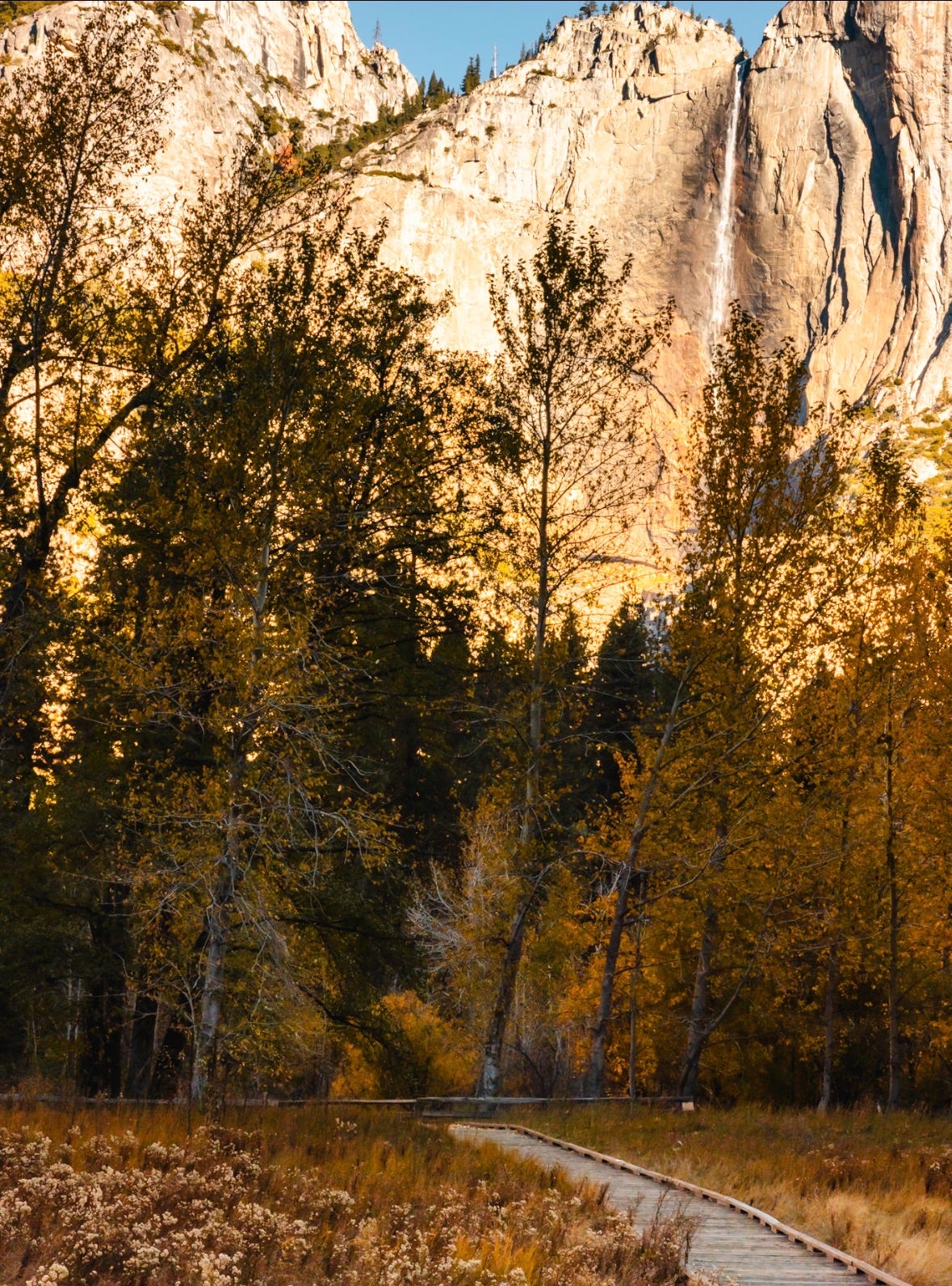
Nearby Sentinel Meadow can provide wider compositions featuring Yosemite Falls, the chapel and changing trees.
Remain on established paths and boardwalks. Meadows are sensitive environments, and walking into them for a slightly cleaner composition is not worth the damage.
9. Cook’s Meadow

Cook’s Meadow is one of the easiest photography walks in Yosemite Valley.
The short loop provides views of Yosemite Falls, Half Dome, Glacier Point and Sentinel Rock, with multiple opportunities to use fall foliage or golden meadow grasses as foreground elements.
This is a strong midday scouting location because you can walk, observe how the light moves and return to the most promising composition later.
Look for
Yosemite Falls above warm meadow grasses
Black oaks framed against granite
Reflections in flooded or wet meadow sections, when present
Boardwalks used as leading lines
Backlit leaves
Half Dome framed between trees
10. Happy Isles
Happy Isles is wetter and more enclosed than many of Yosemite Valley’s broad viewpoints. That makes it especially useful for intimate fall photography.
Dogwoods, maples and other riparian vegetation can produce yellow, pink and red foliage. The area has historically been recommended for late-October and early-November color.
Instead of searching for one grand vista, photograph:
Leaves against dark water
Tree trunks and colorful understory
Small cascades
Moss-covered stones
Reflected foliage
Backlit leaves beside the river
Overcast conditions can be excellent here because they reduce bright patches and make it easier to expose the forest evenly.
11. El Capitan Meadow and El Capitan Picnic Area

The western side of Yosemite Valley can be spectacular in autumn, particularly around El Capitan Meadow and the picnic area.
A golden oak beneath El Capitan provides an immediate sense of scale. Telephoto lenses are especially useful here because they allow you to isolate small trees against enormous sections of granite.
The area also connects with the Valley Loop Trail, which is one of the best ways to discover compositions that cannot be seen from the road.
Do not enter closed meadow areas or create new informal paths.
12. Bridalveil Fall and Bridalveil Meadow
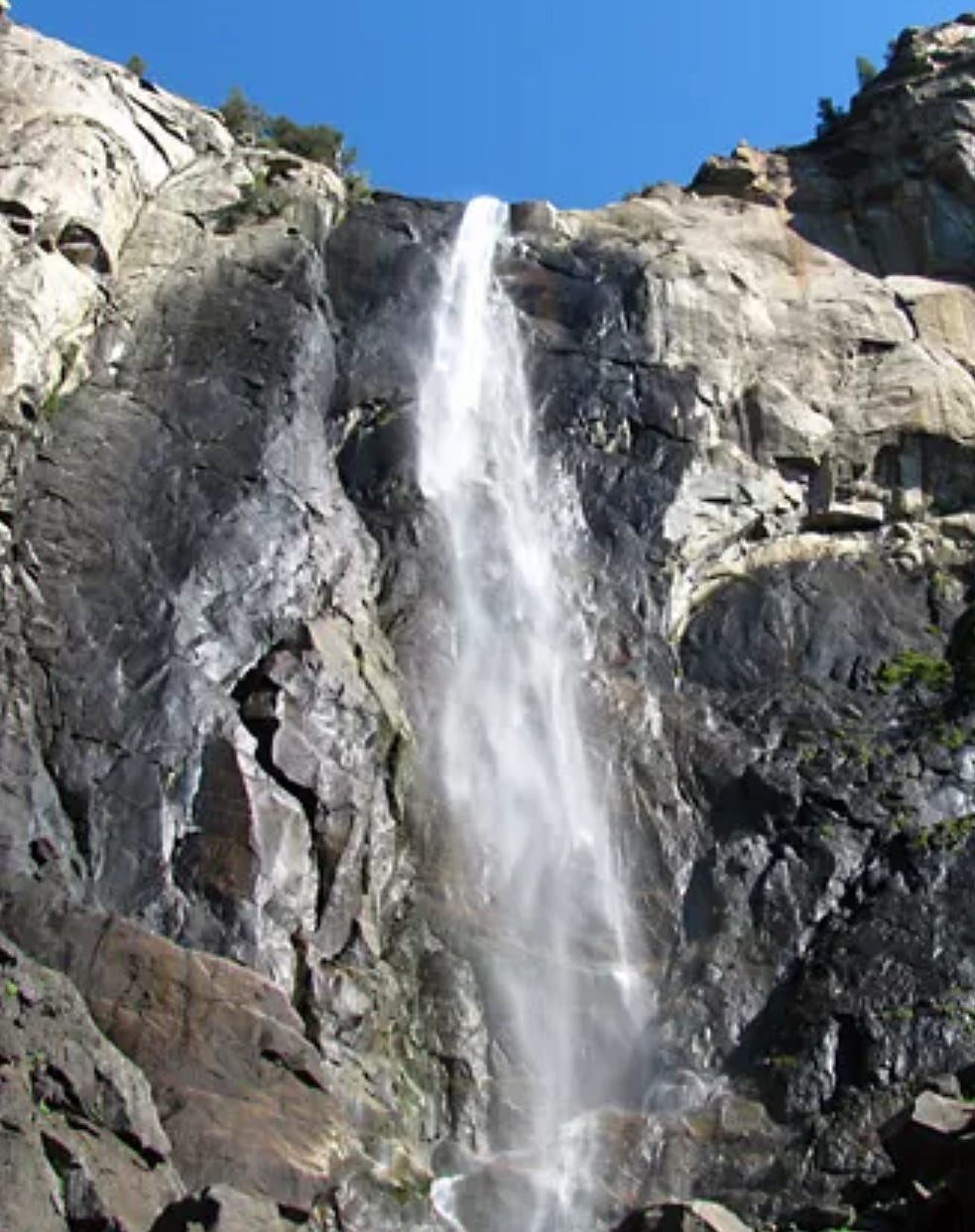
Bridalveil Fall flows year-round, although autumn flow is generally much lighter than spring runoff. The paved trail begins at the Bridalveil Fall parking area.
In fall, the surrounding foliage may be more interesting than the volume of the waterfall itself.
Photograph from:
The meadow beneath Bridalveil Fall
Southside Drive pullouts
The paved approach trail
Tunnel View using a longer focal length
Valley View from farther east
Mist, low clouds or a light storm can make this area especially atmospheric.
13. Tunnel View

Tunnel View remains one of Yosemite’s most famous panoramas, showing El Capitan, Half Dome, Bridalveil Fall and the breadth of Yosemite Valley. It is located at the eastern end of the Wawona Tunnel along Highway 41.
Fall color is less dominant from this elevation because individual trees appear small, but the warm valley floor can contrast beautifully with cool granite and incoming weather.
Best conditions
Tunnel View is strongest when the atmosphere contributes something:
Fog moving through the valley
Fresh snow on the upper cliffs
Storm clouds
Bridalveil Fall catching light
Late-afternoon illumination
Blue-hour layers after sunset
It is worth visiting even during a foliage trip, but I would prioritize river-level scenes when the primary objective is photographing leaves.
14. Glacier Point, if the road remains open

Glacier Point provides a commanding view over Yosemite Valley, Half Dome and the high country. The road usually remains open until sometime in November, but the exact closing date depends on snow.
From above, fall color appears as small pockets of gold scatters across the valley floor.
This is less of a leaf-detail location and more of a way to show autumn within the scale of Yosemite’s entire landscape.
Check current road conditions immediately before traveling. Overnight parking along Glacier Point Road beyond Badger Pass is prohibited beginning October 15 until the road reopens the following season.
A suggested two-day Yosemite fall photography itinerary
Friday evening
Arrive before dark when possible.
Check into lodging, organize equipment, charge batteries and review the next morning’s weather. Pack your camera bag before bed so you can leave quickly before sunrise.
If staying outside the park, calculate the complete drive to Yosemite Valley, not merely the drive to the park entrance. The valley can still be a substantial distance from your lodging.
Saturday morning: chapel, bridges and Southside Drive
Before sunrise: Enter Yosemite Valley and secure a practical parking space near Sentinel Bridge or Yosemite Village.
Sunrise: Photograph the Yosemite Valley Chapel while the building remains in soft light and the front lamp may still be illuminated.
Shortly after sunrise: Walk to Superintendent’s Bridge and Cook’s meadow, before circling back and shooting half dome from sentinel bridge 1 hour after sunrise.
Morning: Circle through the valley, dropping pins on your pre-downloaded Google Maps of high interest pull-off spots. Photograph Pohono bridge and roadside foliage along Southside Drive, Swinging Bridge and the riverbanks.
Saturday midday: food, scouting and intimate photographs
Stop for breakfast or an early lunch in Curry Village.
Use stronger midday light for scouting rather than forcing grand landscapes. Walk portions of the Valley Loop Trail, Cook’s Meadow or Happy Isles and photograph smaller details beneath the tree canopy.
Saturday afternoon and evening: western valley
Return to:
El Capitan Meadow
Northside Drive pullouts
Valley View
Sentinel Bridge
Tunnel View
Choose the final location based on cloud cover and where the sunlight is landing, not merely where you originally planned to be.
Sunday morning: repeat your strongest location
Do not feel obligated to spend Sunday collecting entirely new places.
Return to whichever scene showed the most potential on Saturday. A second attempt may have:
Better reflection
Less wind
More interesting light
Fewer visitors
A composition you noticed too late the previous day
After sunrise, visit any remaining locations before beginning the drive home.
Where to stay for a Yosemite photography weekend
Inside Yosemite Valley
Staying in Yosemite Valley gives photographers the greatest advantage: less driving before sunrise and after sunset.
Official in-park lodging can be reserved up to 366 days in advance, and advance reservations are strongly recommended, especially for fall weekends and holidays.
Yosemite Valley Lodge
Yosemite Valley Lodge is centrally located near Yosemite Falls and offers traditional hotel rooms, family rooms, bunk-style rooms and accessible accommodations.
For a photography trip, its central location is more important than luxury. You can reach Northside Drive, Yosemite Falls, Cook’s Meadow and western valley locations relatively quickly.
Registered guests may use the lodge parking. Visitors who are not staying there should use public day-use parking rather than hotel-designated spaces.
Curry Village
Curry Village offers a mixture of canvas tent cabins, wooden cabins and motel-style rooms beneath Glacier Point.
It can be one of the more budget-conscious ways to stay directly in the valley, but read the description carefully before booking. An unheated tent cabin in late October is a very different experience from a heated cabin with a private bathroom.
Curry Village has complimentary guest parking and several food options, making it convenient for an early start.
The Ahwahnee
The Ahwahnee is Yosemite’s historic luxury hotel, surrounded by oak woodland and views of Half Dome and Yosemite Falls.
It is generally the most expensive choice, but the grounds themselves can be beautiful in autumn. Staying there may make sense for someone who wants the photography weekend to double as a special occasion.
Outside the park
When in-park lodging is unavailable or outside your budget, consider:
El Portal
Yosemite West
Mariposa
Groveland
Fish Camp
Oakhurst
Compare actual travel times to Yosemite Valley before booking. A property marketed as “near Yosemite” may still involve a long, winding drive.
For sunrise photography, El Portal and Yosemite West are generally more convenient than towns farther from the entrances, but weather, road choice and lodging cost should all be considered.
Where to eat in Yosemite Valley
Restaurant schedules change seasonally, so confirm operating hours immediately before the trip.
Yosemite Valley Lodge
Starbucks
The Starbucks at Yosemite Valley Lodge is convenient for coffee and quick breakfast items. Current published hours are 6:30 a.m. to 6:30 p.m., with mobile ordering available through the Starbucks app, though seasonal hours can change.
For photographers leaving before sunrise, it may open too late for the first shoot. Bring coffee or breakfast from your lodging and stop there afterward.
Base Camp Eatery
Base Camp Eatery serves breakfast from 6:30 to 10:30 a.m., followed by lunch and dinner service. It offers casual food, indoor and outdoor seating and grab-and-go choices.
This is a practical place to stop after photographing the chapel and river around sunrise.
Yosemite Village
Yosemite Village contains convenient casual and grab-and-go food, including Degnan’s Kitchen. The seasonal Village Grill may not remain open through late fall, so verify its schedule.
The Village Store is useful for groceries, drinks, snacks and basic supplies. Buying food there can also save time compared with arranging every meal around restaurant hours.
Curry Village
Curry Village typically offers several dining choices:
Coffee Corner, serving Peet’s coffee, pastries and breakfast items
Pizza Deck
Seven Tents Pavilion
Bar 1899
Other outlets that may operate seasonally
Current published information lists Coffee Corner beginning at 6 a.m., making it one of the earlier prepared-coffee options in the valley.
My practical food strategy
Bring:
Breakfast for before sunrise
A refillable water bottle
Protein bars or trail snacks
A packed lunch or easy groceries
One enjoyable dinner planned inside the valley
That prevents the entire photography schedule from being dictated by restaurant hours.
Parking and getting around Yosemite Valley
Yosemite Valley has a one-way traffic pattern across much of the loop. Once you pass a location, returning may require driving a significant distance.
That matters more than usual during a photography trip because light can disappear before you complete another loop.
Use one central parking space when practical
Official NPS guidance warns that Yosemite Valley parking can fill by late morning and advises drivers who secure a space to keep it and use walking, cycling or the free shuttle system.
I personally had no difficulty finding parking during the half day I spent photographing on Halloween weekend in 2025. That may have reflected the season, early hour or conditions that particular weekend, and it should not be treated as a guarantee.
Primary day-use parking is available around:
Yosemite Village
Curry Village
Yosemite Falls
The free Valleywide Shuttle connects lodges, food service, campgrounds and major trailheads. Published service generally runs from 7 a.m. to 10 p.m., with buses arriving approximately every 12 to 22 minutes, although fall schedules can change.
For sunrise photographers, the shuttle may not begin early enough. Plan to walk or drive to the first location.
My recommended strategy
Enter the valley before sunrise.
Photograph one or two locations that require direct vehicle access.
Park centrally near Sentinel Bridge, Yosemite Village or Yosemite Falls.
Walk between nearby locations.
Use the shuttle later if it is operating.
Resume driving in the afternoon when moving toward western-valley viewpoints.
Fall weather in Yosemite
Autumn weather can range from mild sunshine to rain, fog, freezing temperatures or the first snowstorm of the season.
Yosemite receives most of its annual precipitation between October and May. Snow can begin affecting higher roads in late fall, while Yosemite Valley may receive rain or snow during individual storms.
September and October frequently bring warm days and cool nights, but conditions can change quickly. By November, winter weather becomes increasingly possible.
What to expect
During a late-October photography weekend, prepare for:
Cold mornings near or below freezing
Considerably warmer afternoons in direct sun
Rain
Frost
Wind capable of stripping leaves
Fog or low cloud after a storm
Snow at higher elevations
Shorter daylight than summer visitors may expect
Do not rely on a generic forecast for a nearby California town. Check the forecast specifically for Yosemite Valley and for any higher-elevation destination you intend to visit.
Tire chains and road conditions
Fall photographers need to take winter driving seriously.
Chains are less commonly required in October than during winter, but they can still become mandatory. From November through March, visitors should expect that chain controls may be implemented. When controls are active, all vehicles must carry chains, including four-wheel-drive vehicles and rental cars.
Late-fall travelers should carry compatible chains and know how to install them before entering the park.
Yosemite Valley and Wawona remain accessible by road throughout the year, but Tioga Road and Glacier Point Road may close after early storms.
Before leaving:
Check Yosemite road conditions.
Check the weather forecast.
Confirm whether chain controls are active.
Verify whether Glacier Point Road and Tioga Road remain open.
Make sure your rental agreement allows tire-chain use.
Avoid assuming all-wheel drive eliminates the chain requirement.
Entrance fees and reservations
For 2026, Yosemite does not require a timed reservation to enter the park, although entrance fees still apply. Future systems can change, so readers planning a later trip should verify the rule for their travel year.
Current standard entrance fees range from $20 to $35 depending on how a visitor enters, and the park is cashless. A private-vehicle pass is at the upper end of that range.
A lodging reservation is still necessary for anyone spending the night in official accommodations, and campground reservations are separate from park entrance requirements.
What camera gear should you bring?
You do not need an enormous kit, but fall photography benefits from having more than one focal length.
Wide-angle lens
Useful for:
Tunnel View
Valley View
Reflective river scenes
Roads curving through the forest
Chapel compositions that include granite walls
A range around 16–35mm or 24–70mm is practical.
Standard zoom
A 24–70mm lens may be the most useful single lens for the entire trip. It handles wide scenery, medium environmental compositions and tighter architectural photographs.
Telephoto lens
A 70–200mm or longer lens is excellent for:
Isolating individual colorful trees against granite
Compressing the chapel and background foliage
Photographing safe road compositions from a distance
Removing bright or distracting areas
Capturing details across the Merced River
Tripod
Bring a tripod for:
Blue-hour chapel photographs
Long exposures at Valley View
Low-light forest scenes
Focus stacking
Bracketed exposures
Self-portraits or behind-the-scenes content
Keep tripod legs within established surfaces and away from traffic, vegetation and the center of narrow bridges.
Circular polarizer
A polarizer can reduce glare on leaves and deepen color, particularly after rain.
However, it can also remove reflections from the Merced River. Rotate it slowly while watching the effect rather than automatically using maximum polarization.
Extra batteries
Cold weather shortens battery life. Keep spares inside an inner pocket and charge everything each evening.
Lens cloths and rain protection
Even without rain, river mist, condensation and wet vegetation can spot the lens. Carry multiple microfiber cloths and a simple camera cover.
Photography techniques for Yosemite fall color
Expose for bright leaves
Yellow leaves can become surprisingly bright when hit by direct sun. Watch the histogram and protect the highlights.
Use the dark environment
Do not try to brighten every shadow.
Dark pine trees, shaded water and deep forest can make the autumn color appear more luminous.
Search for layers
The most compelling scenes often include:
Leaves or rocks in the foreground
A river, bridge, road or chapel in the middle ground
Granite cliffs in the background
Photograph reflections before the wind begins
Calm water is often most reliable near sunrise. Make reflection photographs early rather than assuming the water will remain still.
Use backlighting
Position the sun behind foliage to make the leaves glow. Shield the lens with a tree trunk or cliff edge to reduce flare.
Photograph details
A weekend should not produce only a collection of famous viewpoints.
Look for:
Leaves suspended in spiderwebs
Water droplets after rain
Small reflections
Layers of red dogwood leaves
Fallen foliage on granite
Leaves floating beneath a bridge
Road markings surrounded by gold
Light on one isolated tree
Bracket difficult scenes
Locations such as Valley View can contain bright cliffs, dark water and shaded foliage in one frame. Exposure bracketing can preserve information across that range, even when you later blend the images very subtly.
What to pack
For a late-October or early-November photography trip, I would bring:
Warm base layers
Fleece or insulated midlayer
Waterproof outer shell
Warm hat and gloves
Waterproof hiking shoes
Extra socks
Headlamp
Tire chains
Ice scraper
Refillable water bottle
Breakfast and snacks
Portable battery pack
Camera rain cover
Lens cloths
Tripod
Extra camera batteries
Offline map
Paper map as a backup
Small first-aid kit
Dress in layers. The temperature difference between a shaded riverbank before sunrise and an exposed meadow during the afternoon can be substantial.
Final advice for planning a Yosemite fall photography trip
Yosemite’s fall color is not a single overlook or one famous grove. It rewards wandering.
The photograph I loved most did not come from a marked viewpoint. It came from noticing the way Southside Drive curved through a corridor of glowing leaves.
That is how I would approach the entire weekend.
Start with a handful of reliable places: Yosemite Valley Chapel, Superintendent’s Bridge, Swinging Bridge, Sentinel Bridge, Pohono Bridge and Valley View. Then leave enough time to walk portions of the Valley Loop Trail, explore the riverbanks and stop safely at the scenes that catch your attention.
Arrive before sunrise. Do not rush through the valley. Watch where the light is landing. Revisit promising locations. And do not let the pursuit of an exact “peak” keep you from appreciating a landscape that is already extraordinary.
Yosemite in autumn is less about witnessing every tree change simultaneously and more about discovering individual moments of color beneath the granite.
Sometimes that is even better.